
 Book Appointment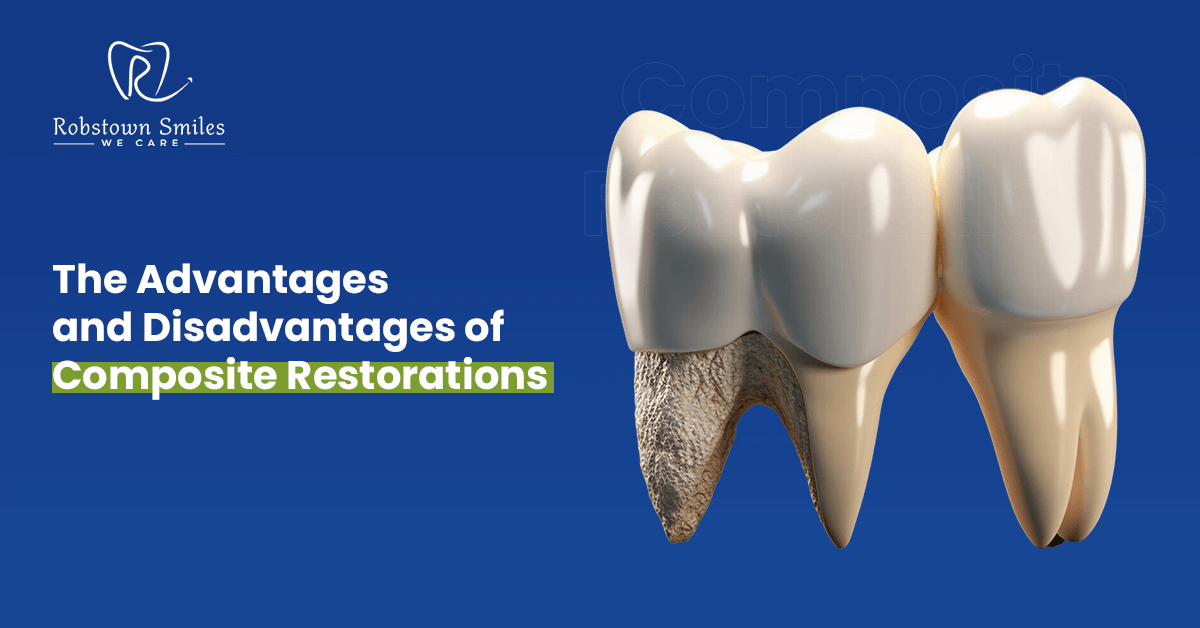
Composites’ use as dental restoration materials has skyrocketed in recent decades. A more aesthetically pleasing substitute for conventional silver amalgam fillings are these tooth-colored fillings. Although there are numerous benefits to composite restoration, there are also some major drawbacks to consider.
To assist you in making a well-informed choice regarding your dental treatment, this blog post will examine the pros and cons of composite restorations.
What are Composite Restorations?
Tooth decay, cavities, fractures, and other forms of tooth damage can be effectively repaired and replaced with composite restorations, a kind of dental restoration. A “composite” substance composed of resin and finely ground glass particles is what gives these repairs their name.
Advantages of Composite Restorations
AestheticAdaptable
Composite restorations have many benefits, one of which is their natural look. You won’t even notice these fillings since they can be customized to blend in with your teeth’s natural shade. Particularly for the front teeth and other visually striking areas of the mouth, this benefit is highly desirable.
Adaptable
Composite materials have a wide range of dental restorative applications, including fillings, bonding, veneers, and more. A more beautiful smile is the outcome of the dentist shaping and molding the composite to fix chips, fissures, and gaps.
Painless
Composite restorations cause less damage to the tooth structure than amalgam fillings. Because of this, the restoration process leaves more of your original tooth intact and requires less drilling.
Strong
Adding additional support to the tooth’s existing structure, composite materials stick well to the tooth’s surface. Future damage and fractures can be lessened with this bonding strength.
Less Sensitive
In contrast to metal fillings, which expand and contract with variations in temperature, restorations made of composite material near you do not. Dental sensitivity and pain may lessen with time if this is done regularly.
Composite Restoration for Front Teeth
A composite reconstruction teeth procedure can rebuild areas that have been damaged by decay, wear, injury or minor fractures. Composite is particularly useful when treating visible teeth because the material can be shaped and colour-matched to create a natural-looking result.
People researching composite dentaire dent devant are generally looking for information about composite treatment for a front tooth. The procedure may be recommended to repair a chip, close a small gap, improve symmetry or restore a worn edge. Online searches for dent composite avant apres often show before-and-after examples, but individual results depend on the condition of the tooth, the amount of composite required and the dentist’s treatment plan.
Also Read: 5 Reasons Why Your Gums Need Dental Attention
Disadvantages of Composite Restorations
Durability
In high-stress areas, such as the back molars, amalgam fillings last much longer than composite ones, but composite ones still don’t last forever. The cost of dental care in the long run can rise if they wear out too quickly and need replacement.
Stains
Over time, composites can become stained or discolored, particularly when exposed to smoking, coffee, tea, or red wine. If you want them to look their best, you might have to polish them often or avoid certain foods and drinks.
Expensive
Due to the materials utilized and the degree of skill needed for installation, composite restorations can end up costing more than amalgam fillings. Although the aesthetic advantages are clear, the cost may be a concern for some.
Needs Precision
It takes a lot of skill and precision to place composite fillings appropriately. The process is technique-sensitive; in order to form a long-lasting connection, you must make sure the tooth is dry and clean during the operation.
Short Life Expectancy
Crowns and inlays tend to last longer than composite restorations. How long they last depends on things including how well you take care of your teeth, what you eat, and where the restoration is placed.
Because of their versatility and natural look, composite restorations are a popular option in contemporary dentistry for a variety of dental operations that seek to restore the function and aesthetics of damaged teeth. Composite and alternative dental restoration materials should be chosen after careful consideration of the patient’s unique requirements, taking into account factors such as the treatment site, aesthetic goals, and available funds.
If you are in need of dental restorations, Robstown Smiles is the place to go. We can help you regain your self-esteem and attractive smile. Thanks to our dedication to customized treatment and state-of-the-art equipment, we will ensure that your tooth restoration procedure is both painless and successful. Give us a chance to help you get the stunning smile you’ve always wanted. Come see us so we can help you achieve a smile that is both healthy and beautiful.
Additional Composite Filling Disadvantages to Consider
Some important composite filling disadvantages include possible staining, gradual wear, sensitivity after treatment and a shorter lifespan in areas exposed to heavy biting pressure. Other composite disadvantages may include chipping, surface roughness and the need for occasional polishing, repair or replacement.
The treatment is also sensitive to moisture during placement. If the tooth cannot be kept sufficiently clean and dry, the bond may not be as reliable. Composite may therefore be less suitable for certain large cavities or teeth that experience considerable chewing pressure. A dentist must assess the location and extent of the damage before recommending the most appropriate restoration.
Composite Dental Treatment, Cost and Safety
The cost of a composite restoration depends on the tooth being treated, the extent of the damage and whether the procedure is restorative or cosmetic. People using the search phrase composite dentaire prix are looking for the price of dental composite treatment. However, an accurate price can only be provided after a dental examination because every restoration requires a different amount of material and clinical work.
The French term composite dentaire refers to dental composite, while composite dental is another phrase patients may use when researching this treatment. Searches such as composite dentaire danger generally relate to possible risks or safety concerns. Composite materials are widely used in dentistry, but patients may experience temporary sensitivity, staining, wear or failure of the restoration. Discuss any known allergies, ongoing sensitivity or concerns about dental materials with your dentist before treatment.
Patients may also encounter location-based searches such as composite bonding paris when comparing treatment options internationally. Regardless of location, treatment decisions should be based on an in-person examination, the dentist’s experience, the condition of the tooth and the expected durability of the restoration.
FAQs:
What is composite restoration in dentistry?
A composite restoration is a tooth-coloured repair made using resin and finely ground filler particles. Dentists use it to repair cavities, chips, cracks, worn surfaces and certain cosmetic imperfections.
What are the main composite filling disadvantages?
The main composite filling disadvantages include staining, wear, possible chipping and a shorter lifespan in teeth exposed to heavy chewing forces. The material must also be placed carefully in a clean, dry environment.
Are there any composite disadvantages for back teeth?
Possible composite disadvantages for back teeth include faster wear or fracture when the filling is large or exposed to considerable biting pressure. Your dentist will evaluate whether composite or another restorative material is more suitable.
Can dental composite be used on front teeth?
Yes. Dental composite is commonly used to repair chipped, cracked, uneven or slightly gapped front teeth. It can be matched to the colour of the surrounding enamel and shaped for a natural appearance.
What does composite dentaire dent devant mean?
Composite dentaire dent devant is a French search phrase referring to composite treatment for a front tooth. It may involve repairing a chip, restoring a worn edge or improving the tooth’s shape.
What can I expect from dent composite avant apres results?
Dent composite avant apres refers to before-and-after results for a tooth treated with composite. The final appearance depends on the original condition of the tooth, colour matching, the amount of reconstruction and the dentist’s technique.
How much does composite dentaire prix usually cost?
The composite dentaire prix varies according to the number of teeth treated, the extent of the damage and whether the treatment is restorative or cosmetic. A clinical examination is needed to provide an accurate estimate.
Is there any composite dentaire danger?
Concerns related to composite dentaire danger generally involve sensitivity, staining, wear, chipping or failure of the bond. Your dentist can explain the material being used and determine whether it is suitable for your tooth.
What is composite reconstruction teeth treatment?
Composite reconstruction teeth treatment uses tooth-coloured resin to rebuild damaged, worn, fractured or decayed sections of one or more teeth. Suitability depends on the amount of healthy tooth structure remaining.
Is composite bonding paris different from composite bonding in the United States?
The basic principles behind composite bonding paris and composite bonding in the United States are generally similar, although treatment protocols, prices and provider qualifications may vary. Patients should choose a qualified local dental professional and attend an examination before treatment.