
 Book Appointment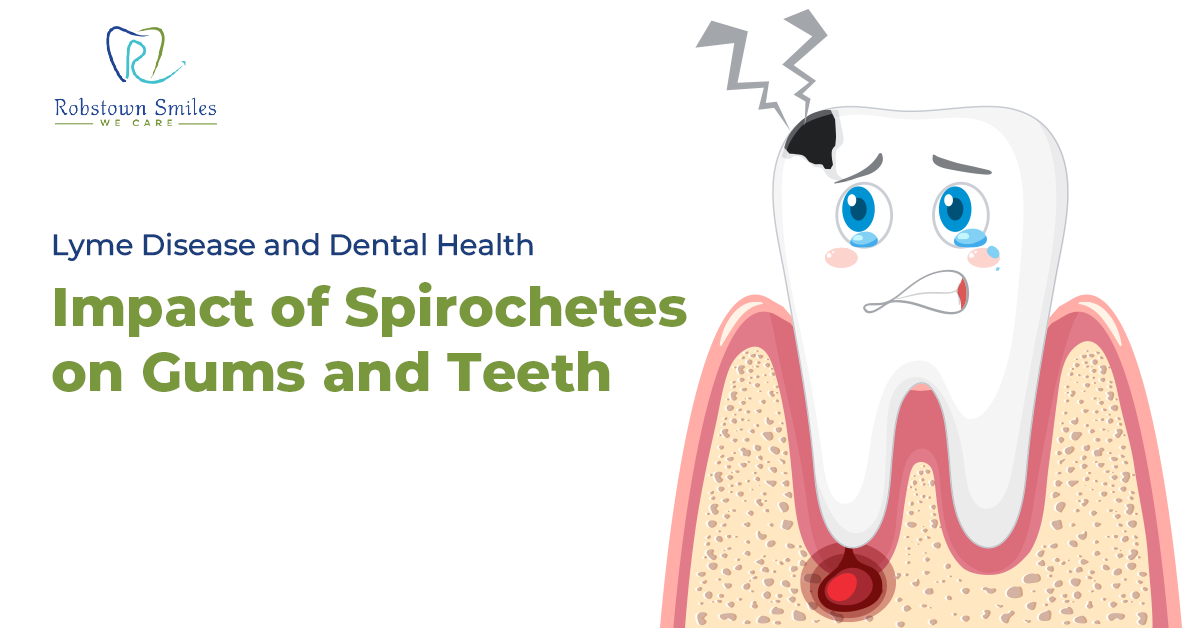
Borrelia burgdorferi bacteria, serve as the causative agent, of Lyme disease. The disease primarily targets the skin, joints, systems, and heart of infected people. Lyme disease produces, health effects that remain poorly understood, by medical professionals. The link between Lyme disease, and dental health exists, because of spirochetes, which are spiral-shaped bacteria, that cause gum, and tooth infections.
Understanding the Link Between Lyme Disease and Oral Health
How Spirochetes Affect Oral Health
The field of dentistry has previously encountered spirochetes because these bacteria are not novel to practice and have been associated with particular oral spirochete species that contribute to periodontal disease progression. Lyme disease bacteria enter the bloodstream after infection to cause mouth inflammation. The interdental area provides suitable low-oxygen conditions for bacterial multiplication because these bacteria naturally reside in such environments.
The term spirochetes in mouth refers to spiral-shaped bacteria that may be found in the oral cavity. Certain oral spirochetes, particularly species belonging to the Treponema genus, are associated with periodontal disease and may increase inside deep gum pockets. These dental spirochetes are not automatically the same as Borrelia burgdorferi, the bacterium responsible for Lyme disease. Finding periodontal bacteria does not confirm that someone has Lyme disease.
Gum Inflammation and Bleeding
Light brushing causes people with Lyme disease to experience gum inflammation and sensitivity, together with frequent bleeding. The body’s response, to activity in the gums, might be the reason, for this occurrence. Periodontitis develops when untreated inflammation persists. The gum infection causes damage to both the bone structure that supports teeth and the surrounding soft tissues.
Lyme Disease, Gums and Teeth
People researching lyme disease gums may be experiencing bleeding, swelling or sensitivity. However, these symptoms can also result from plaque, gingivitis, periodontitis, medications or other health conditions.
Searches for lyme disease teeth and lyme disease and teeth often involve concerns about unexplained discomfort. Lyme disease is not considered a common direct cause of tooth decay. Any painful, loose or sensitive tooth should be checked for common dental causes such as cavities, cracks, infection, grinding or gum disease.
Also Read: Are toothpicks safe for your gums and teeth?
Tooth Pain and Sensitivity
Some individuals with Lyme disease may also encounter tooth pain or sensitivity without any visible dental problems. That may stem from nerve inflammation triggered by the bacteria or as an outcome of the body’s reaction. These signs are frequently confused with issues due, to Lyme disease’s ability to imitate other ailments, resulting in delayed or inaccurate medical care.
Can Lyme Disease Cause Tooth Pain?
Patients asking can lyme disease cause tooth pain should understand that Lyme disease may occasionally produce nerve or facial pain that feels as though it comes from a tooth. However, this is not one of the most common lyme disease symptoms.
Possible lyme disease symptoms teeth concerns may include tooth-like pain, facial discomfort, jaw pain or sensitivity without an obvious dental cause. A dentist should first rule out decay, cracked teeth, abscesses, periodontal disease and temporomandibular joint problems.
Lyme Disease and Tooth Loss
Concerns about lyme disease tooth loss require careful explanation. Lyme disease is not generally recognised as a direct cause of teeth spontaneously falling out. Tooth loss is more commonly associated with advanced gum disease, untreated decay, trauma or another dental condition.
Patients may ask does lyme disease cause teeth to fall out, can lyme disease cause teeth to fall out, does lyme disease cause your teeth to fall out or can lyme disease cause your teeth to fall out. Current evidence does not establish Lyme disease as a routine direct cause of tooth loss. Loose teeth require prompt examination for periodontal bone loss, infection or another underlying dental problem.
Lyme Disease and Tooth Extraction
The subject of lyme disease and tooth extraction should be discussed with the dentist and the healthcare professional treating the condition. A Lyme disease diagnosis does not automatically mean that a painful tooth needs to be removed.
Before recommending extraction, the dentist should confirm whether the tooth has decay, infection, a fracture, advanced gum disease or irreversible damage. Unexplained facial or tooth pain should not lead to extraction until possible dental and non-dental causes have been properly assessed.
Importance of Early Detection
People with Lyme disease need to practice hygiene habits consistently while visiting their dentist for dental check-ups to track changes in gum and dental health. Dental practitioners offer specialized care to reduce plaque accumulation and inflammation, which helps prevent enduring dental damage.
Recognising Lyme Disease Symptoms and Testing
Common lyme disease symptoms may include an expanding rash, fever, headache, chills, fatigue, swollen lymph nodes and muscle or joint pain. Later symptoms may include facial palsy, nerve pain, arthritis or heart-related complications. Dental discomfort alone cannot confirm Lyme disease.
People searching for early stages of lyme disease pictures are generally trying to recognise an erythema migrans rash. The rash can expand gradually and may not always resemble a classic bull’s-eye. Online pictures should not replace a professional medical assessment.
People searching how to test for lymes disease should consult a qualified healthcare professional. The CDC recommends an FDA-cleared two-step antibody-testing process when laboratory testing is appropriate. Tests may be negative during the first few weeks because the body needs time to produce detectable antibodies.
Choose Expert Dental Care with Robstown Smiles
Individuals diagnosed with Lyme disease should pay attention to any changes, in their health. Not disregard them as insignificant occurrences. The dental professionals at Robstown Smiles acknowledge the impact of health issues on well-being. Our clinic offers tailored services to promote health in individuals with Lyme disease or other challenging medical conditions. Initiating your dental care journey with a scheduled visit, to our clinic can contribute to enhancing your well-being.
FAQs:
Can lyme disease cause tooth pain?
Can lyme disease cause tooth pain is a common question. Lyme disease may occasionally cause nerve or facial pain that feels like it comes from a tooth. However, decay, cracks, infection and gum disease are more common causes and should be ruled out first. A published case report describes Lyme-related neuropathy presenting as dental pain, but a single case does not prove this is common. PubMed case report
Does lyme disease cause teeth to fall out?
There is insufficient evidence that Lyme disease directly causes teeth to fall out. Loose or missing teeth are more commonly associated with advanced periodontal disease, untreated decay, trauma or other dental conditions.
What are oral spirochetes?
Oral spirochetes are spiral-shaped bacteria found in the mouth. Certain species are associated with periodontal disease, especially in deep gum pockets. They should not automatically be identified as the Lyme disease bacterium.
What are dental spirochetes?
Dental spirochetes generally refer to spirochete bacteria found in dental plaque or periodontal pockets. Some may contribute to gum disease, but their presence does not by itself diagnose Lyme disease.
What are possible lyme disease symptoms teeth may experience?
Possible lyme disease symptoms teeth concerns reported by patients include tooth-like pain, facial discomfort or sensitivity without an obvious cause. These symptoms are nonspecific, so common dental conditions must be investigated first.
Is tooth extraction necessary for Lyme-related tooth pain?
Not necessarily. When considering lyme disease and tooth extraction, the dentist should confirm that the tooth has irreversible damage or infection. Extraction should not be based solely on an unexplained pain symptom or a Lyme disease diagnosis.
How to test for lymes disease?
People searching how to test for lymes disease should speak with a healthcare professional. Lyme disease testing generally uses a CDC-recommended two-step antibody-testing process. Results must be interpreted alongside symptoms and exposure history, particularly because early testing can be negative.
Are early stages of lyme disease pictures enough for diagnosis?
No. Early stages of lyme disease pictures can help someone recognise a possible rash, but Lyme disease cannot be confirmed by comparing a rash with online images. A healthcare professional should assess the rash, symptoms and likelihood of tick exposure.
Important medical correction: I recommend adding the first clarification paragraph prominently. Lyme disease is caused by Borrelia transmitted by infected ticks, while periodontal disease commonly involves different oral bacteria. Presenting them as the same infection could mislead readers. Lyme-related dental pain is possible but appears uncommon and is mainly supported by limited reports rather than strong evidence.